
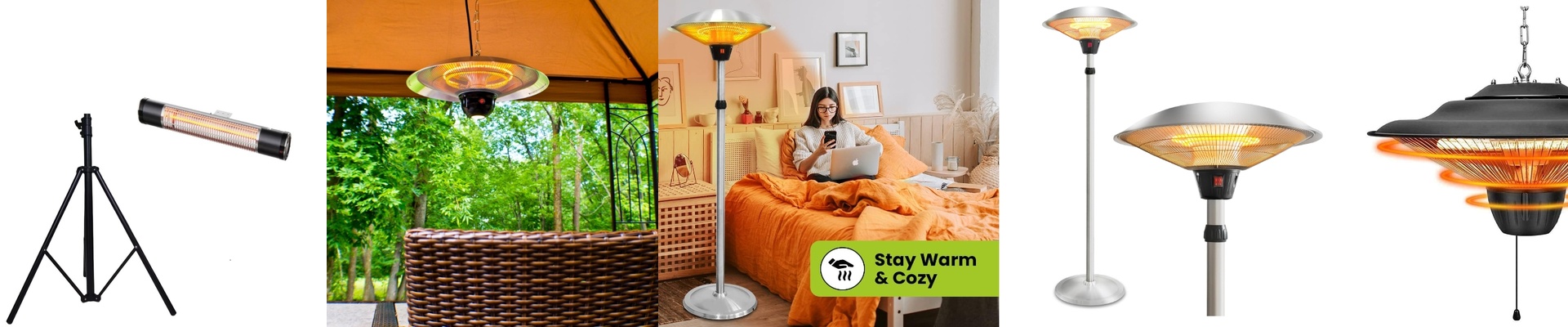




When the house finally quiets down at night, the wrong heater doesn’t just miss the mark on warmth—it turns comfort into a problem with noise, drafts, and air that feels too dry. In a bedroom, you need heat that’s steady, even, and quiet enough to disappear.
What matters, technically
Infrared heaters warm the way the sun does—by radiating heat directly onto people and objects, not by pushing air around. In practice, that means no fan noise, and warmth that lands immediately instead of waiting for the whole room to “come up.” Many bedroom infrared models run on a carbon fiber element or a quartz tube to deliver short- or medium-wave infrared output. It’s focused heat that doesn’t depend on moving parts. Because the warmth is radiant, the air stays calmer. That’s a real difference when you’re trying to sleep, work, or just get comfortable through joint stiffness.
Why this works in a bedroom
In a bedroom, infrared warmth can get you feeling cozy faster—and that matters when achy joints keep you tossing. Radiant heat penetrates superficially, helping muscles and connective tissues relax, which can make movement feel easier and less tense. That relaxation can support better circulation, which helps the body recover and can ease the feeling of stiffness. And unlike forced-air heat, infrared doesn’t kick up dust and allergens the same way, and it doesn’t dry the air the same way either. You get a gentle, sun-like warmth that helps you rest—warm from the inside out.
The practical details you need
Infrared bedroom heaters are usually electric and plug into a standard outlet, but they still pull real power—often around 1,200–1,500 watts. If you can, run it on a dedicated circuit so you don’t end up chasing tripped breakers. Keep the heater at a safe distance from bedding, curtains, and walls, and look for a model with tip-over protection and a thermostat for steady comfort. For the best results, aim the unit so the infrared warmth reaches your bed directly, then let the thermostat hold the temperature.