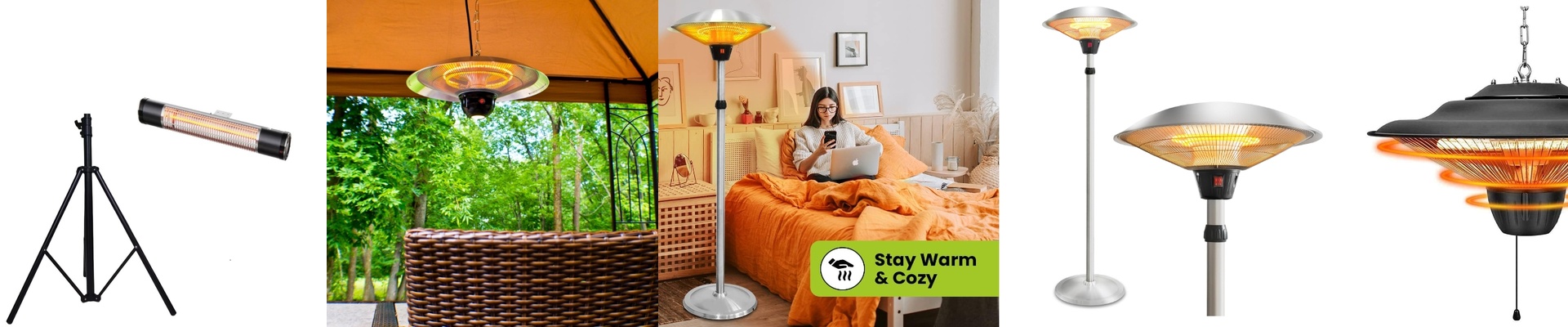
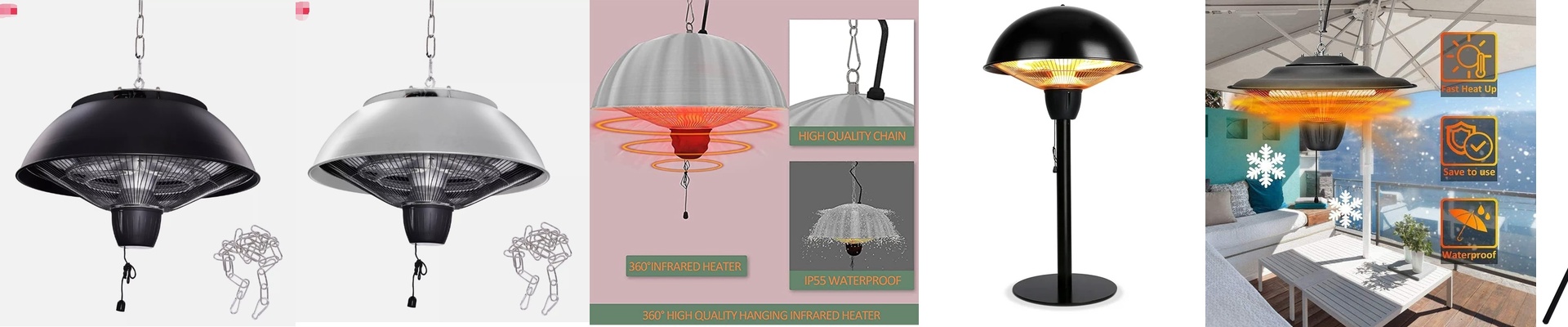

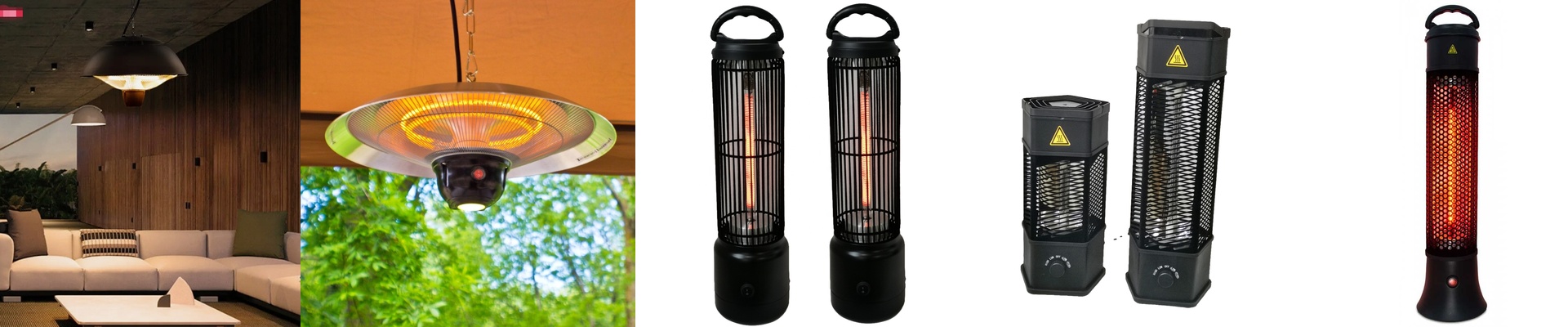
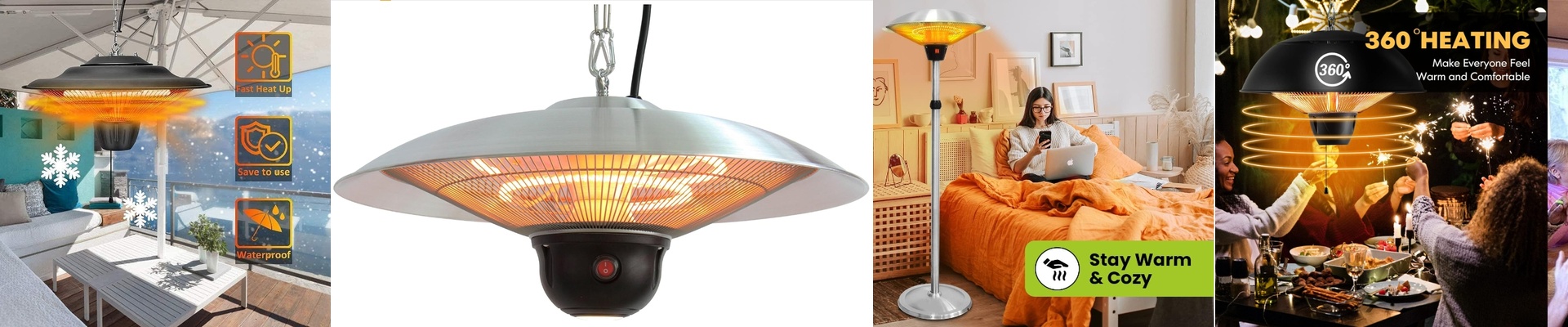
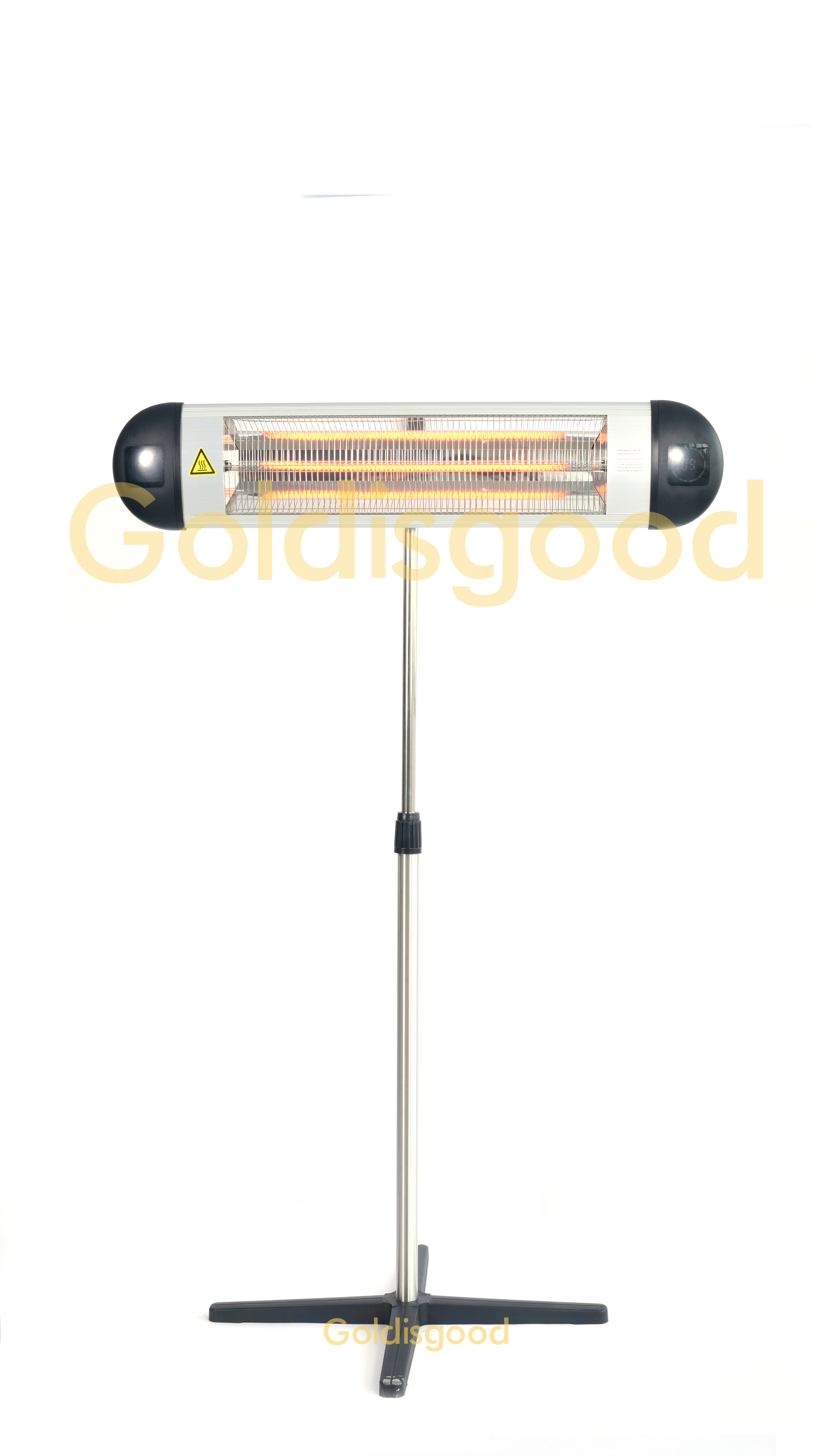
Steam clings to everything, and the air stays heavy. Whether it’s a bathroom that’s basically a home spa or an outdoor room that never quite dries out, warmth can’t be a maybe. It has to be solid. A heater that feels good but makes you nervous about the wiring isn’t a fix. We built our bulk infrared patio heaters around one point: keep the electricity fully isolated in wet conditions, so you can run heat without running a risk.
What matters under the hood
Infrared warmth starts with a sealed heating element—quartz tubes or carbon fiber—that turns electricity into radiant heat without blowing air around. Inside, the element is electrically isolated from the outer housing, and the power path stays separate from any exposed metal. For spaces that stay damp, we lean on double insulation and fully enclosed circuitry, so the current stays put even when condensation shows up. The upshot is 100% electrical isolation in the design, checked with leakage and dielectric tests. You can get these heaters in the common voltages—120V and 240V—and in compact lengths, so they drop cleanly into tight ceiling or wall mounts and tie into standard junction boxes.
Why this approach works in wet, humid spots
In a humid bathroom or a breezy outdoor room, air-based heaters can stir up moisture and end up feeling clammy. Infrared heaters lay heat directly onto people and surfaces, so you feel it right away, without waiting for the air to warm up. Because the core system is sealed and isolated, performance stays steady even with repeated steam exposure. You get fewer cold spots, faster comfort, and consistent operation that doesn’t get thrown off by humidity spikes. Energy use stays focused, too—heat goes where you feel it, not into heating the whole volume of air.
The field notes you actually need
Even with solid isolation, wet locations still demand proper installation. Put the heater on a GFCI-protected circuit, keep it on a dedicated line, and follow local codes for damp and wet locations. Check the IP rating and match it to the space—go higher when there’s direct spray or showers. Avoid spots where the unit can get splashed head-on, and leave clearance around the housing for airflow. Get the wiring and placement right, and these heaters deliver dependable warmth that feels as safe as it does comfortable.